Spider season in Ireland arrives every September, and you do not need a calendar to know it has started. A large spider bolts across the living room floor. Another sits motionless in the bath. Webs appear overnight on the hedge, the wheelie bin and the wing mirrors of the car. If your home feels busier than it did in August, there is a simple reason for it, and it has nothing to do with the weather.
Why Spider Season in Ireland Peaks in September
Here is the part that surprises people. Spiders are not coming indoors to escape the cold. That idea is one of the most stubborn myths going, but spiders are cold-blooded, so warmth does not pull them in the way it pulls a cat towards a radiator. In fact, most of the spiders you meet indoors have lived indoors their whole lives.
What actually changes in September is that the males reach maturity. Once they do, they abandon their webs and roam in search of a mate. Because they travel at floor level and move quickly, you notice them constantly. That is why spider season in Ireland seems to begin so abruptly. The females, meanwhile, stay exactly where they are. So the spider sprinting across your rug is almost certainly a male on a mission rather than a visitor fleeing the frost.
The Spiders You Are Most Likely to See
Ireland has roughly 400 spider species, but only a handful turn up in houses. These are the ones we get asked about every autumn.
- Giant house spider – large, brown and fast. This is the classic bath spider, and it is completely harmless.
- Cellar spider – very thin legs, hangs in ceiling corners and vibrates when disturbed. It also eats other spiders, so it earns its keep.
- Lace web spider – found around window frames, air bricks and brickwork, leaving untidy white webbing.
- Garden orb weaver – builds the big circular webs across doorways and hedges. It lives outdoors and rarely comes in.
- Money spiders – tiny and by far the most numerous family in Irish gardens.
- Noble false widow – shiny brown body, bulbous abdomen, cream markings. This is the one that makes the headlines.
What About the False Widow?
The noble false widow is the one species worth learning to recognise. Two decades ago it was almost unknown in Ireland. Today it is described as one of the most common spiders in and around urban buildings here and in Britain.
Research from the University of Galway confirmed that its bite can occasionally need hospital treatment. Recorded symptoms included pain, swelling, nausea and, rarely, a bacterial infection. Proportion matters, though. Bites remain uncommon, and the overwhelming majority of encounters end with nothing happening at all.
One finding from that work is genuinely practical. Roughly 88% of recorded bites happened while people slept, or when a spider was trapped against skin inside clothing. So shake out clothes that have been left on the floor, check shoes stored in the porch, and keep bedding from trailing on the ground. Those small habits remove most of the risk. If you are bitten and the area becomes increasingly painful or looks infected, contact your GP.
Signs You Have More Than a Passing Visitor
Spider season in Ireland produces plenty of one-off sightings, and a lone wanderer is nothing to worry about. These signs point to something more settled.
- Webs that reappear within a day of being cleared away.
- Pale, papery egg sacs tucked into corners, window recesses or roof spaces.
- Shed skins, which people often mistake for dead spiders.
- Heavy webbing around air bricks, vents, soffits and external lights.
- A noticeable fly or midge problem, since spiders follow their food supply.
- Repeated sightings in the same room rather than the occasional wanderer.
How to Keep Them Out During Spider Season in Ireland
Effective spider control starts with the building itself, not with a can of spray. Take away the entry points and the food supply, and the problem shrinks on its own.
- Seal gaps around doors, windows, pipework and cables. Spiders need very little space.
- Fit brush strips to external doors, especially the back door and the garage.
- Put fly screens on the windows you leave open, because fewer insects means fewer spiders.
- Repair damaged vents, air bricks and soffits, then clear webbing away from them.
- Cut shrubs and climbing plants back so they no longer touch the walls.
- Move bins, firewood and log piles away from the house.
- Declutter sheds, garages, attics and under-stairs cupboards, since undisturbed clutter is ideal habitat.
- Vacuum webs and egg sacs regularly, and empty the vacuum outside afterwards.
- Switch outdoor lighting to warm or yellow bulbs, which attract far fewer flying insects.
What Does Not Work
Plenty of folk remedies do the rounds every autumn. Conkers under the sofa do nothing, and neither does a saucer of vinegar. Peppermint oil may smell pleasant, but there is no reliable evidence it keeps spiders out of a house. Squashing them is not a strategy either, because another male will simply wander in tomorrow. Above all, prevention beats reaction every time.
When Spider Season in Ireland Needs a Professional
Most households can manage with proofing and a vacuum. Sometimes, however, the numbers justify a proper treatment. That usually applies when false widows are breeding indoors, when a business cannot have webbing on display, or when a nervous household wants the problem gone.
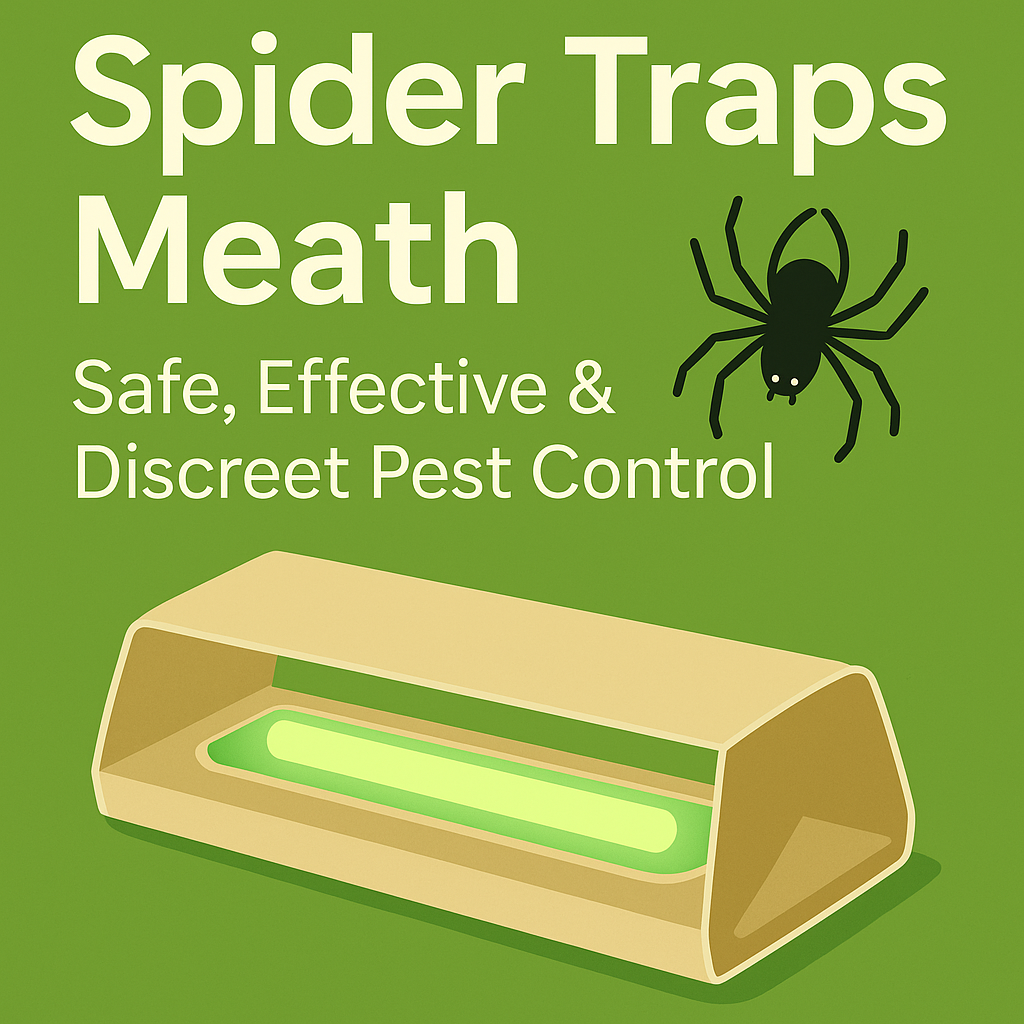
We treat harbourage points, apply residual products where they are safe and appropriate, and fit discreet spider traps in Meath and the surrounding counties to monitor activity and catch wanderers. Because spiders and insects are linked, we often pair this with insect control so the food supply drops at the same time.
Book Before the Nights Draw In
Autumn is also when other pests start looking for a way indoors, so it is worth dealing with everything in one visit. Our guides to cluster flies in the attic and the most common pests in Irish homes cover what else tends to appear at this time of year. You can also browse the full pest control advice hub for seasonal guidance.
Spider season in Ireland only runs for a few weeks, but the proofing work you do now keeps paying off all winter. Raptor Pest Control looks after homes and businesses across Meath, Dublin, Louth and Kildare. If the spiders in your house have gone from an occasional nuisance to a daily event, contact us for a survey and a straightforward quote.